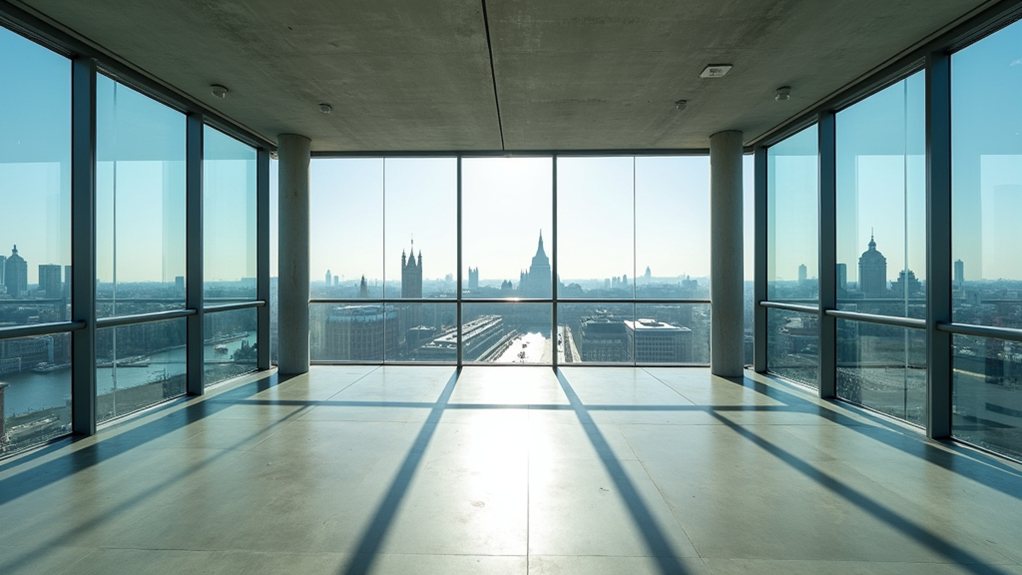
The viewing level at Tate Modern offers panoramic views of London alongside access to thematic exhibits like the Start Display and Thematic Collection Displays. Visitors can explore key works while observing the city’s skyline, enhancing the experience. To navigate easily, start with the permanent displays in the Natalie Bell Building and then move to the Turbine Hall for large-scale installations. Facilities such as the riverside restaurant add comfort. Further details clarify how to maximize the visit and uncover diverse artistic highlights.
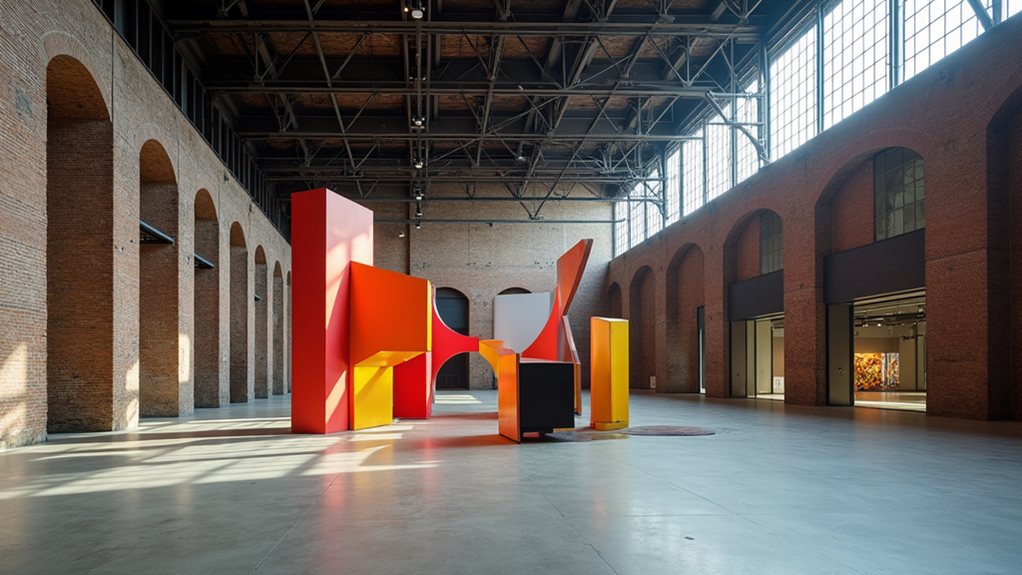
Tate Modern offers several distinct viewing levels that showcase important works of modern and contemporary art. Visitors entering from the river side first encounter the Turbine Hall, a vast five-story space that once housed electricity generators. This area is dedicated to large-scale, site-specific installations that change regularly, typically from October to March. The installations are designed to fit the hall’s industrial scale and history, often providing an immersive experience. Notable past commissions have included works by artists such as Olafur Eliasson, Ai Weiwei, and Kara Walker, each transforming the space in unique ways. Sometimes, access to these installations can be temporarily affected due to server connection issues related to high visitor demand or technical configurations.
Beyond the Turbine Hall, the Start Display located in the Natalie Bell Building introduces some of the museum’s best-loved artworks. This area is arranged thematically, grouping pieces by concepts like colour, form, and identity. The Start Display features around ten major works at a time, which are rotated periodically to represent different cultures, countries, and periods. Important highlights include Marcel Duchamp’s *Fountain*, a porcelain urinal recognized as a landmark of conceptual art, Andy Warhol’s *Marilyn Diptych*, which reflects themes of fame and mortality through repeated images of Marilyn Monroe, and Giacomo Balla’s *Abstract Speed – The Car has Passed*, a Futurist painting capturing motion and modernity. Duchamp’s *Fountain* exemplifies the idea of the ‘readymade’ sculpture, which challenged traditional notions of art by transforming an everyday object into a work of art. Contemporary themes and societal issues are also engaged through works like Andra Ursuţa’s *Predators ‘R Us*, which is part of the Start Display. Additionally, the restaurant at Tate Modern offers visitors stunning views of the Thames, enhancing the overall experience of art and culture.
The Start Display in the Natalie Bell Building showcases rotating iconic artworks exploring colour, form, and identity.
Further exploration leads to thematic collection displays housed in the Natalie Bell Building, such as “Artist and Society,” which examines how artists engage with social and political issues. For example, Lucio Fontana’s *Spatial Concept ‘Waiting’* is featured in this section.
Other focus rooms include “In the Studio,” which explores artists’ creative processes with works like Lee Krasner’s *Gothic Landscape*, and “Materials and Objects,” highlighting experimental use of materials in art, including installations by Nalini Malani.
These areas provide visitors with a thorough understanding of key movements and moments in 20th- and 21st-century art, making Tate Modern a structured and accessible venue for exploring modern art.
Frequently Asked Questions
What Are the Tate Modern’s Opening Hours?
Tate Modern opens from 10:00 AM to 6:00 PM Sunday through Friday, with consistent weekday hours throughout the year except holidays.
On Fridays and Saturdays, hours extend to 9:00 PM starting September 26, 2025, catering to younger visitors and nightlife culture.
The museum closes annually on December 24, 25, and 26 but opens January 1. Visitors should check special holiday hours before planning a visit.
Monthly late events offer additional evening access.
Is There an Entry Fee for the Tate Modern?
There is no entry fee to access Tate Modern’s permanent collection and main gallery spaces, which are open to all visitors without booking or timed tickets.
Visitors can freely explore seven floors of themed exhibitions and enjoy panoramic city views from the Viewing Level.
However, temporary special exhibitions require separate paid tickets, with prices varying by age and concession status.
Membership options offer additional benefits, including free entry to all exhibitions.
Are Guided Tours Available at the Tate Modern?
Guided tours are available at Tate Modern, including free daily tours led by volunteers, lasting about 45 minutes and starting on Level 2 in the Natalie Bell Building.
Private tours require advance booking and offer flexible topics and durations.
Commercial options with paid guides exist, some catering to families.
Tours primarily operate in English, with varying accessibility.
Visitors should confirm tour availability and specifics at the ticket desk or with the operators on their visit day.
Is the Tate Modern Wheelchair Accessible?
The Tate Modern is wheelchair accessible, offering multiple step-free entrances, including the main Holland Street and east river-facing doors.
Elevators serve all floors, with some requiring a RADAR key available onsite. Accessible toilets and Changing Places facilities are present.
Visitors can book accessible parking and reserve wheelchairs or mobility scooters in advance. Staff assist with access needs, and pathways are free of cobblestones or steep hills, ensuring smooth movement for wheelchair users throughout the museum.
Can I Bring Bags or Backpacks Inside the Museum?
Visitors may bring bags inside Tate Modern only if they meet size restrictions; bags larger than cabin size (55cm x 40cm x 20cm) are prohibited.
Large backpacks and suitcases must be left at the free cloakroom on Level 0 or in paid lockers.
Small hand-held bags up to approximately 11.5cm x 16.5cm are allowed. Clear bags are preferred for quicker security checks.
Random bag inspections occur, and oversized bags are not permitted in galleries.