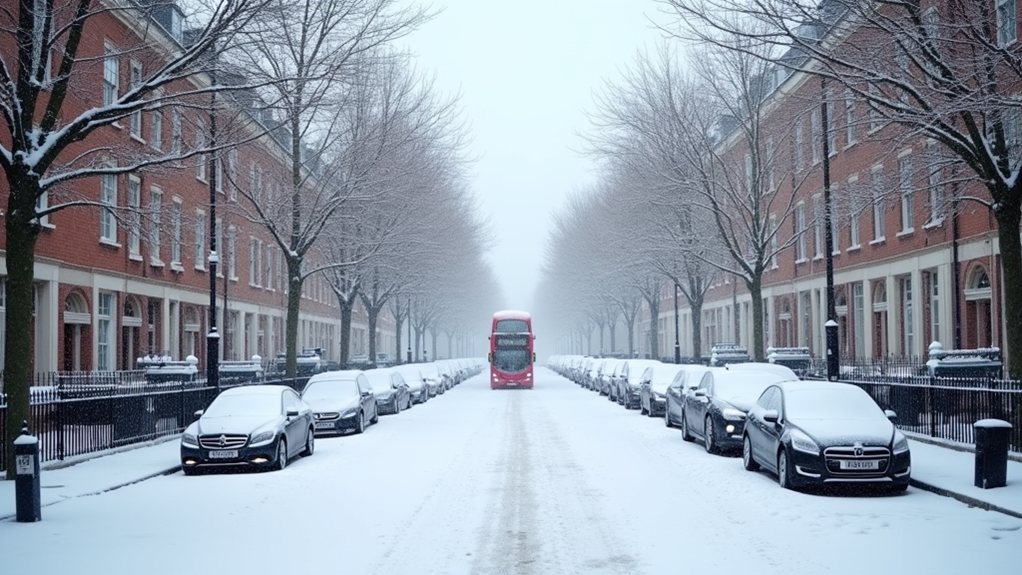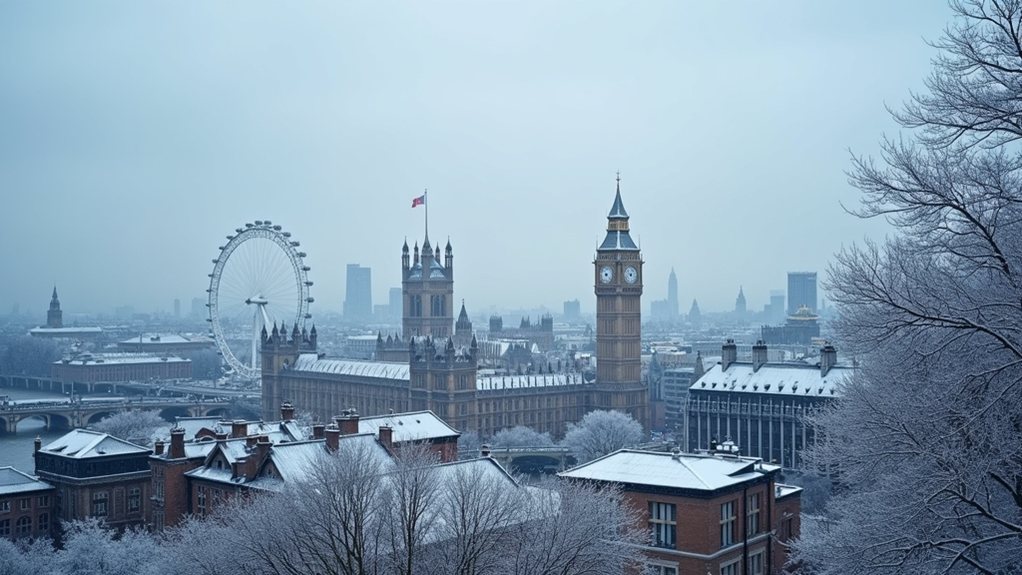

Snowfall in London, once a common winter sight, has shown notable changes in frequency and intensity over recent decades. Historical data reveals a marked decline in snow days across the capital, with the period from 1961-1990 experiencing considerably more snowfall than recent winters. The winter of 1962-63 stands as London’s snowiest on record, with an impressive snow index of 25.2 and snow covering the ground for 69 consecutive days.
London’s once-regular snowfall has dramatically declined since the record-breaking winter of 1962-63.
Recent winters tell a different story, with the 2024/25 season ranking a mere 68th out of 79 winters since records began in 1946/47. This continues a trend of increasingly snowless winters in the capital, with only one winter in the past 30 years breaking into the top 10 snowiest seasons. The 2009/10 winter was the exception, bringing notable disruption to London’s transportation networks. The changing patterns align with observations showing that a snow lying day requires over 50% ground cover at 9am for official qualification.
While London currently averages about 16 days of snowfall annually, totaling approximately 18.4 inches or 46.7 cm, these figures represent a decline from historical averages. Climate data indicates the greatest decreases in snow days have occurred in southern and central England, with London particularly affected by this trend. January typically receives the highest monthly snowfall with 19.4 cm accumulation on average. In comparison, Aberdeen experiences over twice as much snow with 115.2 cm annually.
The impact of even light snowfall on London remains substantial despite its rarity. Travel times across Greater London typically increase by 5.5-7.6% during light snow events, while heavy snowfall can extend journeys by 7.4-11.4%. The December 2010 snowfall demonstrated how quickly London’s infrastructure can become overwhelmed by sudden winter weather.
For comparison, other UK cities experience notably more snow days annually, with Birmingham averaging 24 snow days and Manchester 20. Northern areas like Aberdeen see approximately 34 snow days per year on average. These regional variations highlight London’s relatively mild winter climate despite occasional severe events.
The Metropolitan Snow Survey, compiled annually since 1946/47, provides valuable historical context for London’s changing relationship with snow. As climate patterns continue to shift, Londoners may need to adjust to increasingly infrequent but potentially more severe snowfall events in the coming decades.