
Few traditional British dishes have experienced such a dramatic journey as jellied eels, the once-common East End delicacy now finding new interest among culinary enthusiasts. This distinctive dish emerged in 18th century London when the Thames teemed with eels, offering a cheap, nutritious meal for working-class families.
By the 19th century, jellied eels became firmly associated with East End pie and mash shops, where they served as a staple for dock workers and laborers.
Jellied eels defined East London workingman’s fare, becoming inseparable from the pie and mash culture that sustained laborers.
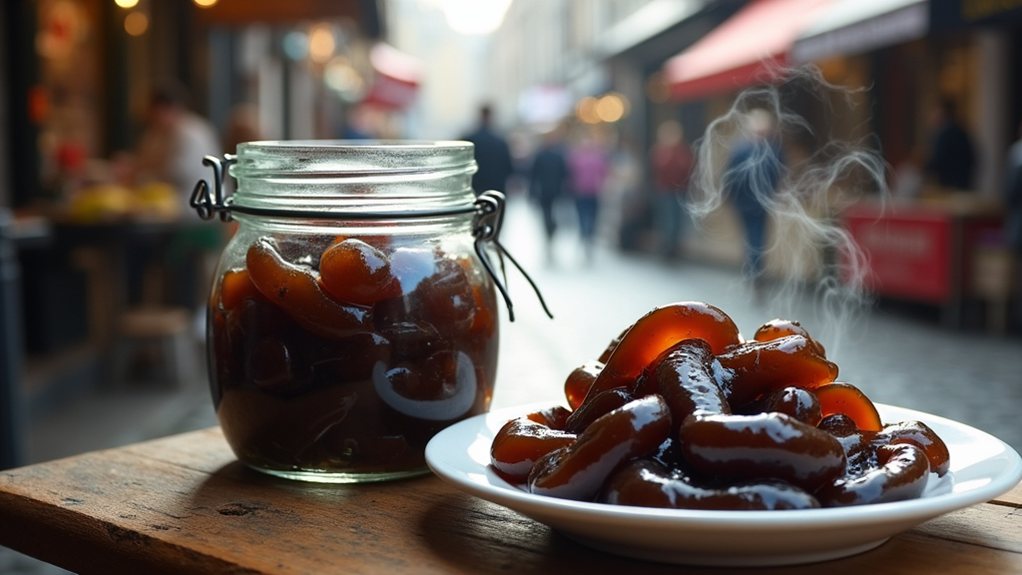
The preparation method remains largely unchanged since Victorian times. Fresh eels are chopped into sections and boiled with water, salt, parsley, and lemon. Cooks add vinegar, sliced onion, peppercorns, and bay leaves, then simmer the eels for precisely 14 minutes to keep bones intact. The cooking liquor cools to form a natural gelatinous jelly, suspending the eel pieces in a savory aspic-like broth. The resulting dish is extraordinarily nutritious, providing a remarkable 70g of protein per serving.
Traditionally served cold with vinegar or chili vinegar, the dish pairs perfectly with pie, mash, and parsley liquor. The combination represents the Cockney culinary tradition that has defined East London’s food identity for centuries.
Jellied eels reached peak popularity during World War II rationing, with over 100 eel-and-pie shops operating in post-war London. However, several factors contributed to their decline. Thames pollution severely reduced eel populations, with the river declared biologically dead in 1957.
Modern tastes shifted away from this working-class fare, and eels now require importing from Ireland rather than catching locally. Historically, renowned families like the Manze family established iconic shops that became cultural institutions in London’s East End.
Today, jellied eels survive at historic establishments like Goddards in Greenwich, which still uses an 1890 recipe, and Cockney’s Pie and Mash Shop. These dedicated outposts keep the tradition alive, attracting curious food enthusiasts and nostalgic Londoners.
Modern recreations often feature jellied eels reheated with parsley, maintaining the enduring flavor that has sustained generations.
The potential revival of jellied eels connects to both culinary heritage appreciation and environmental improvements in the Thames. As river fish populations fluctuate and interest in authentic regional cuisine grows, this once-humble dish symbolizing East End identity, resilience, and resourcefulness may yet secure its place in London’s culinary future.