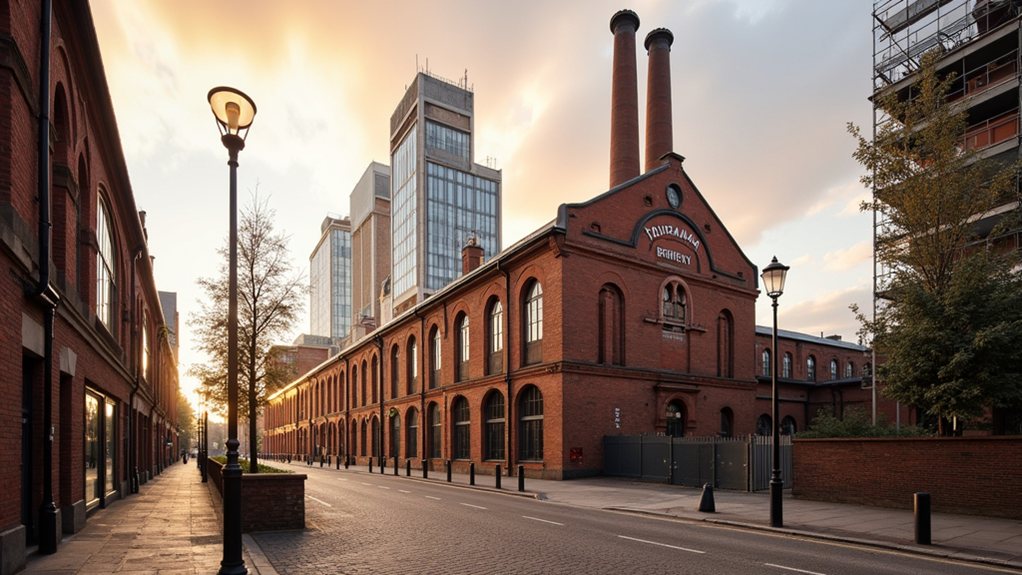

Three and a half centuries of brewing history stand at a crossroads as the Historic Truman Brewery, once the largest brewery in the world, faces an uncertain future. The iconic Brick Lane institution, which began in 1666 when Joseph Truman joined William Bucknall’s Brewhouse, evolved from modest beginnings into an industrial powerhouse that shaped London’s East End landscape for generations.
The brewery’s remarkable journey tracks the rise of British brewing, from Joseph Truman’s acquisition of the original lease in 1679 to the explosive growth under his son Benjamin who took the helm in 1722. Under Benjamin’s leadership and the subsequent formation of Truman, Hanbury, Buxton & Co., the brewery received royal recognition and ranked as London’s third-largest brewery by 1748.
By 1853, Truman’s reached its zenith as the world’s largest brewery, producing an impressive 400,000 barrels annually across its six-acre site. The brewery’s footprint had grown so vast that it absorbed several streets, demonstrating its economic dominance in Victorian London. This expansion continued with the purchase of Philips Brewery in Burton in 1873, marking a strategic shift in operations.
The 20th century brought unprecedented challenges that the historic brewery could not overcome. Changing consumer preferences favoring lager, increased competition from imports, and industry consolidation through mergers created insurmountable obstacles. Despite attempts at restructuring and rebranding, Truman’s brewing operations ceased in 1989, ending more than three centuries of continuous production.
Today, the former industrial complex faces decisions about preservation versus redevelopment. The brewery’s buildings represent an important industrial heritage site with deep connections to London’s social and economic history. Since 2010, the site has undergone a remarkable transformation into a vibrant cultural hub housing creative businesses, markets, and event venues. The brewery was saved from demolition largely due to its cultural legacy and historical significance within the community. Visitors can explore the rooftop to discover historical graffiti and remnants of old brewing equipment from its operational days.
Any transformation must balance respect for this heritage with contemporary needs and economic viability. The brewery that once employed hundreds and produced for royalty now stands as a physical reminder of Britain’s industrial past.
Whether as a cultural hub, commercial space, or mixed-use development, the Historic Truman Brewery’s next chapter will determine how future generations experience this landmark of brewing history.