
A 3-day London itinerary includes historic sites like Buckingham Palace, Westminster Abbey, and the Tower of London, combined with cultural experiences at museums in South Kensington and vibrant markets such as Borough Market. Visitors can enjoy views from the Sky Garden, stroll through parks, and explore neighborhoods like Notting Hill. Efficient use of the tube and advance booking for popular attractions are recommended. This plan balances sightseeing with leisure and culinary experiences, guiding travelers toward a thorough visit. Further details guarantee well-rounded planning.
Although London offers countless attractions, a well-structured three-day itinerary can help visitors explore key historical sites, cultural landmarks, and vibrant neighborhoods efficiently.
On the first day, one should begin at Buckingham Palace, the official residence of the British monarch, where the Changing of the Guard ceremony takes place. From there, a visit to Westminster Abbey is recommended. This Gothic church is historically significant as the site of British monarchs’ coronations and the burial place of notable figures. The area is also well-served by public transport, making it easy to access via the tube network. For a unique perspective, visitors can also enjoy panoramic views of the city from the Sky Garden, which offers free entry but requires advance booking. Additionally, many nearby attractions such as Trafalgar Square and the National Gallery offer free entry to enhance the day’s exploration. Visitors should also consider the stunning views available from the Sky Garden, which adds an exceptional experience to their visit.
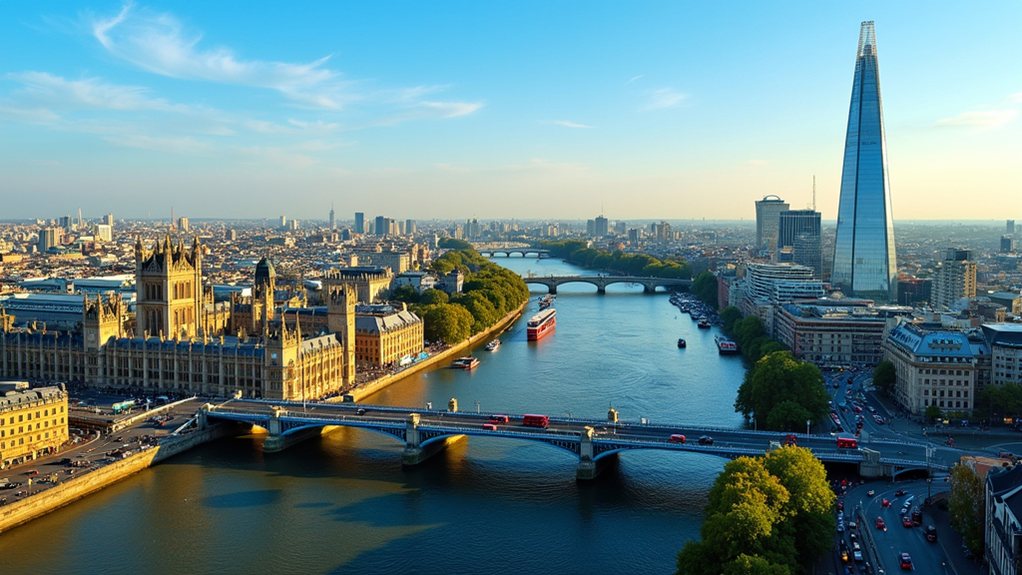
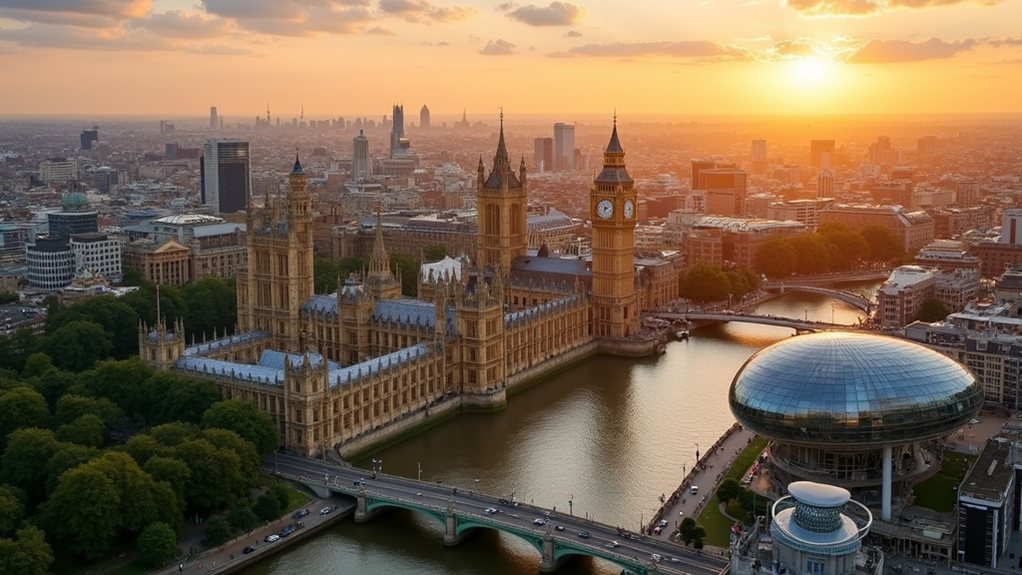
Next, the Palace of Westminster and Big Ben can be observed from Westminster Bridge, both serving as iconic symbols of British politics and architecture. Walking through St. James’s Park offers a scenic break with views of the lake and its resident pelicans. The day concludes in Covent Garden, a bustling area known for its shops, street performers, and dining options.
Take in iconic sights from Westminster Bridge, enjoy St. James’s Park, and end your day amid Covent Garden’s lively atmosphere.
Day two focuses on the Tower of London, a UNESCO World Heritage Site that houses the Crown Jewels and showcases medieval walls and royal history. After exploring the Tower, visitors should head to Tower Bridge to appreciate its twin towers and the glass walkway that offers panoramic views of the Thames River. A visit to Borough Market is ideal for those seeking affordable and diverse culinary experiences from artisan vendors. A stroll along the Southbank path reveals cultural locations including Shakespeare’s Globe Theatre and the Tate Modern art museum. Crossing the Millennium Bridge provides excellent views of St. Paul’s Cathedral. Borough Market is also worth visiting for those interested in gourmet and artisanal food offerings.
The final day centers on South Kensington’s museums, including the Victoria and Albert Museum, the Natural History Museum, and the Science Museum, all free to enter. Afterward, Kensington Gardens and Hyde Park provide expansive green spaces with walking paths and landmarks like The Serpentine lake. Kensington Palace, a royal residence with a museum, offers insight into royal history and art. For additional cultural experience, visiting Notting Hill’s colorful streets and market or Harrods department store is suggested. Ending the day with an afternoon tea, often available at historic venues such as Kensington Palace, offers a traditional British cultural activity.
Frequently Asked Questions
What’s the Best Time of Year to Visit London?
The best time to visit London is during the shoulder seasons of spring (March to May) and early autumn (September to October).
These months offer mild temperatures around 11-16°C, fewer crowds, and lower accommodation costs. Visitors can enjoy outdoor activities comfortably, with manageable rain and daylight hours extending into the evening.
Early booking is less critical than in peak summer, and major events occur without overwhelming tourist numbers, making travel more convenient.
How Do I Get Around London Cheaply?
Traveling cheaply in London is best achieved using buses, which have a flat fare of £1.75 with unlimited transfers within one hour.
Daily caps limit bus and tram spending to £2.55, and combined Tube and rail travel caps range from £8.90 to £16.30 depending on zones.
Off-peak travel reduces costs on Tube and rail, and using contactless or Oyster cards guarantees automatic fare capping.
Concessions and travel passes further lower expenses.
Are London Attractions Wheelchair Accessible?
London attractions generally provide good wheelchair accessibility.
Buckingham Palace offers step-free access and free manual wheelchair loans with advance notice.
Madame Tussauds allows multiple wheelchairs and free helper entry.
The London Eye accommodates several wheelchairs per ride but requires booking ahead.
Kew Gardens and the British Museum have flat paths and accessible facilities.
Public transport and taxis comply with accessibility standards, making travel between sites manageable for wheelchair users throughout the city.
What’s the Tipping Etiquette in London Restaurants?
In London restaurants, tipping usually ranges from 10-15% if no service charge is added.
Many establishments include a 12.5% discretionary service charge, which replaces the need for an extra tip. If the service charge is present, additional tipping is not required.
Tips can be added via card machines, as cashless payments are common.
In casual or self-service venues, tipping is generally unnecessary, and patrons should check bills carefully to avoid double tipping.
Can I Use Contactless Payment on London Public Transport?
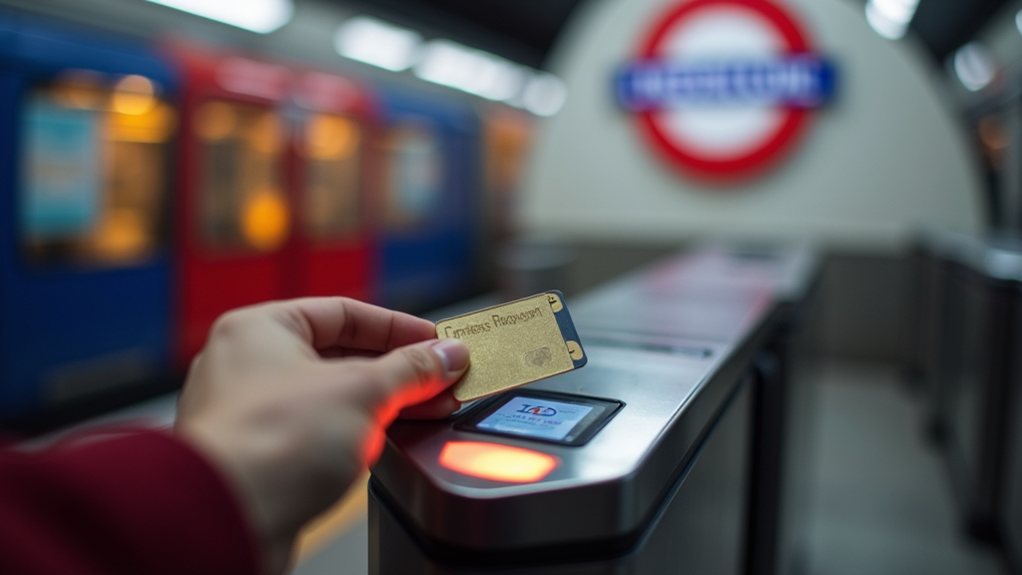
Contactless payment is accepted across London public transport, including the Underground, buses, trams, and National Rail within London.
Users must touch in and out on tube and rail journeys, while buses and trams require only a single tap.
Accepted methods include Visa, Mastercard, American Express, Apple Pay, and Google Pay.
Consistency with the same card or device is essential to avoid incorrect charges, and travelers should separate cards to prevent double payments.