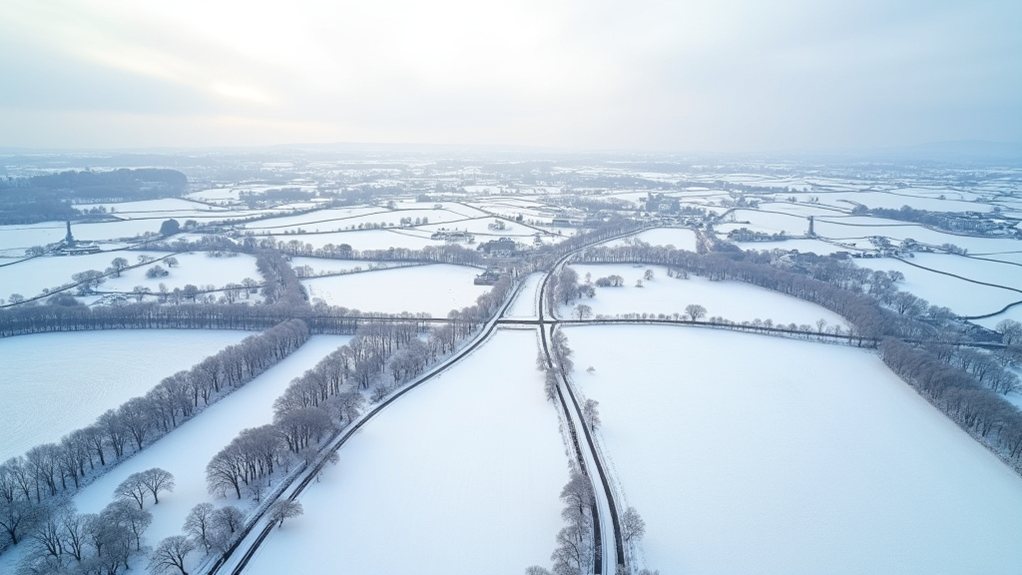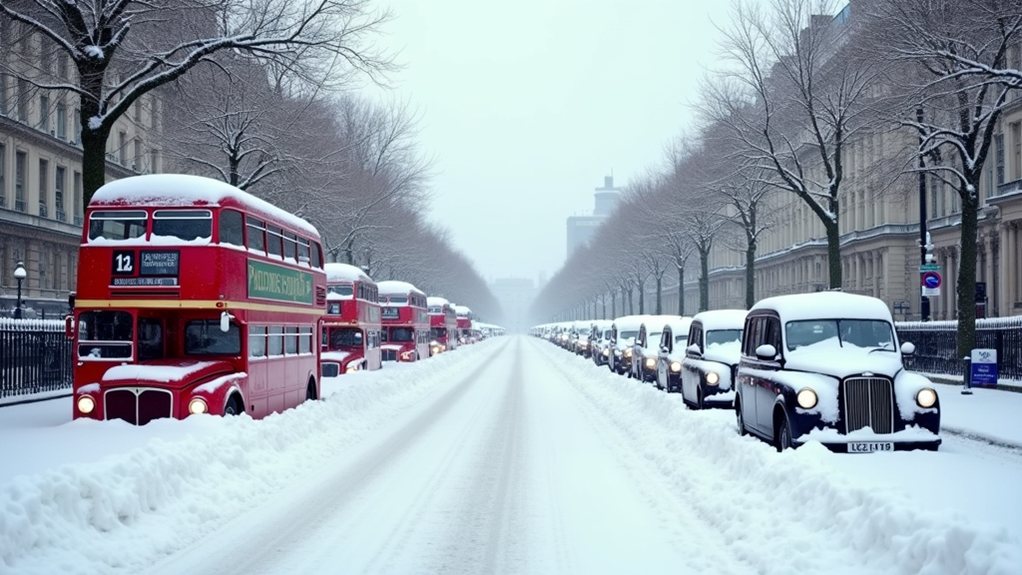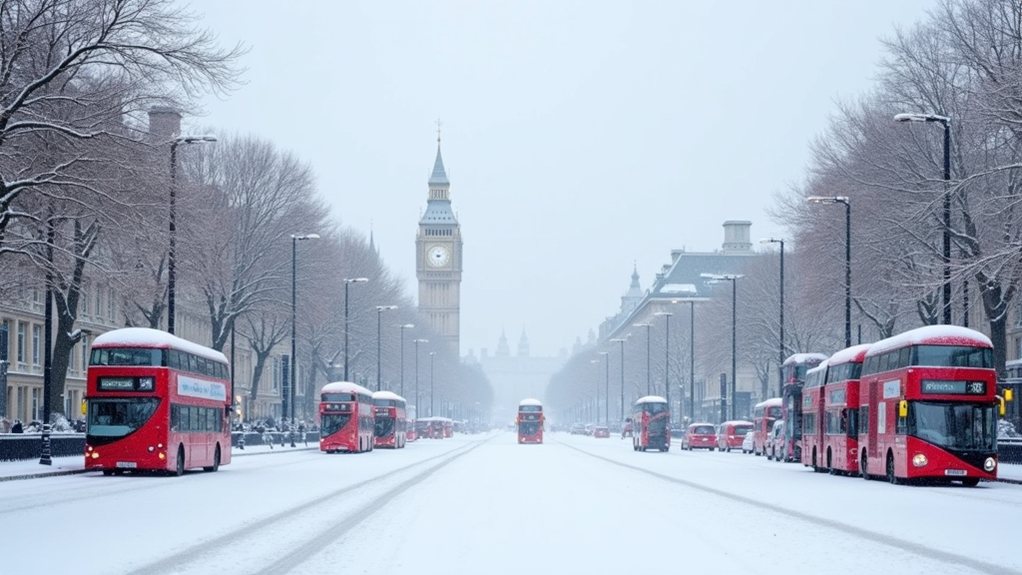
When a rare meteorological phenomenon called sudden stratospheric warming (SSW) disrupted the jet stream in late February 2018, the United Kingdom faced one of its most severe winter weather events in recent memory. This event, nicknamed the “Beast from the East,” brought freezing temperatures and heavy snowfall across the nation, causing widespread disruption to transportation and essential services.
The meteorological cause of this extreme weather involved a rapid warming of up to 50°C in the stratosphere over just a couple of days. This warming affected the polar vortex, forcing cold continental air from Russia to rush toward the UK and creating blocking patterns that kept the frigid conditions in place for an extended period.
Sudden stratospheric warming disrupted the polar vortex, unleashing Siberian air that remained locked over Britain for days.
The impact on transportation was severe, with hundreds of flights canceled and nearly all train operators issuing warnings of disruptions. Most dramatically, around 1,000 vehicles were stranded on the M80 near Glasgow, with some motorists stuck for up to 13 hours in their vehicles as traffic tailed back eight miles in both directions.
When Storm Emma arrived from the Azores on March 1st, it collided with the already established cold air mass, producing blizzards, gales, and sleet. This combination prompted the Met Office to issue red warnings for parts of southern England, indicating danger to life. This was particularly significant as it represented only the third red warning issued in seven years.
The event caused ten fatalities and led to significant infrastructure challenges. The National Grid issued a gas deficit warning, creating concerns about energy supplies. Several villages were isolated by drifting snow, and supermarkets experienced food shortages as supply chains failed. Weather forecasts now indicate a potential recurrence of similar conditions around November 25th and 26th as significant stratospheric warming is being observed in the Canadian polar region.
Urban areas proved particularly vulnerable to the combined effects of extreme cold and heavy snow. With up to 50 centimeters falling on high ground and rural areas experiencing temperature lows of -12°C, cities across the UK faced paralysis despite their typically more robust infrastructure.
The possibility of recurrence remains a concern for urban planners and emergency services, as similar stratospheric warming events could bring comparable conditions to major UK cities in the future.