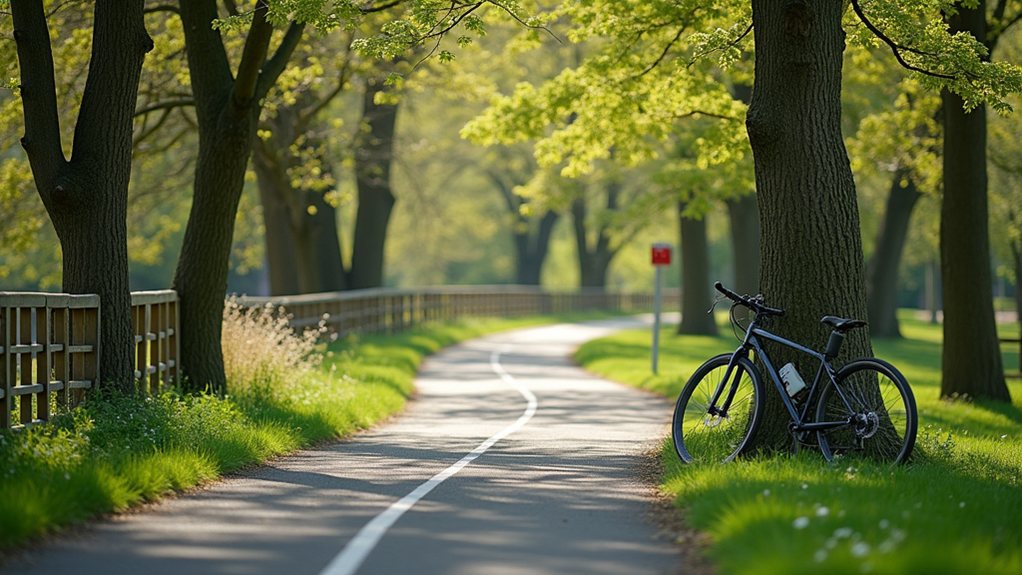

Similar conservation success came with Hampstead Heath in 1871, preserving roughly 790 acres of open space from urban building projects. These victories relied on strategic alliances between landowners, professional classes, and local residents who funded legal challenges and public advocacy efforts. Wealthy residents near London commons leveraged their political influence to block developments threatening both the landscape and their property values.
The Commons Preservation Society and its allies employed medieval common rights and manorial law to challenge enclosure proposals. Their legal innovations extended protection to areas like Wimbledon Common, Putney Heath, and Clapham Common. These conservation-focused acts limited the sale of crown and manorial lands for speculative urban schemes, gradually integrating concepts of long-term ecological regeneration rather than focusing solely on timber or land value. Urban wildlife initiatives now continue this tradition through green roofs and gardens that enhance biodiversity within city settings. This approach mirrors successful modern projects like Kingsdale Head, which focuses on native moss restoration to protect peatlands and enhance biodiversity.
These early battles established a significant precedent: environmental and amenity value could outweigh perceived economic “progress.” The protected spaces now serve as major urban carbon sinks and climate adaptation resources through flood mitigation and cooling effects. This approach mirrors modern conservation efforts like the Brazzaville Declaration that protects carbon-rich peatlands in the Congo Basin. They also provide substantial public health benefits through recreation opportunities, especially for dense inner-urban populations.
Environmental protection triumphed over economic interests, creating vital urban spaces that now combat climate change while supporting public wellbeing.
The successful community coalitions demonstrated that organized local interests could effectively resist state or private infrastructure ambitions in green spaces. Their vision preserved large semi-natural habitats that now support diverse woodland, heathland, and wetland species, creating the green corridors that allow wildlife to thrive in and around London today.