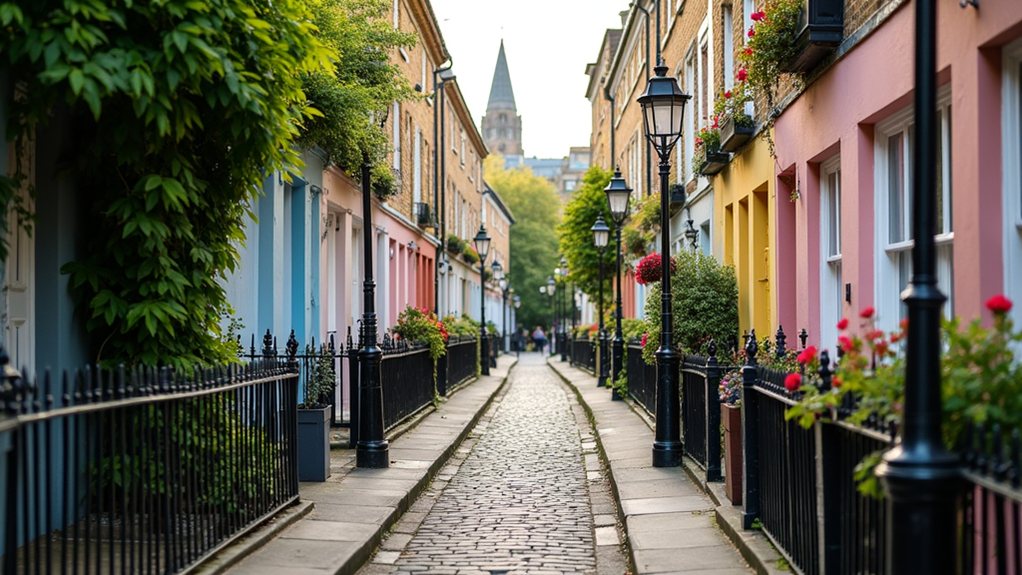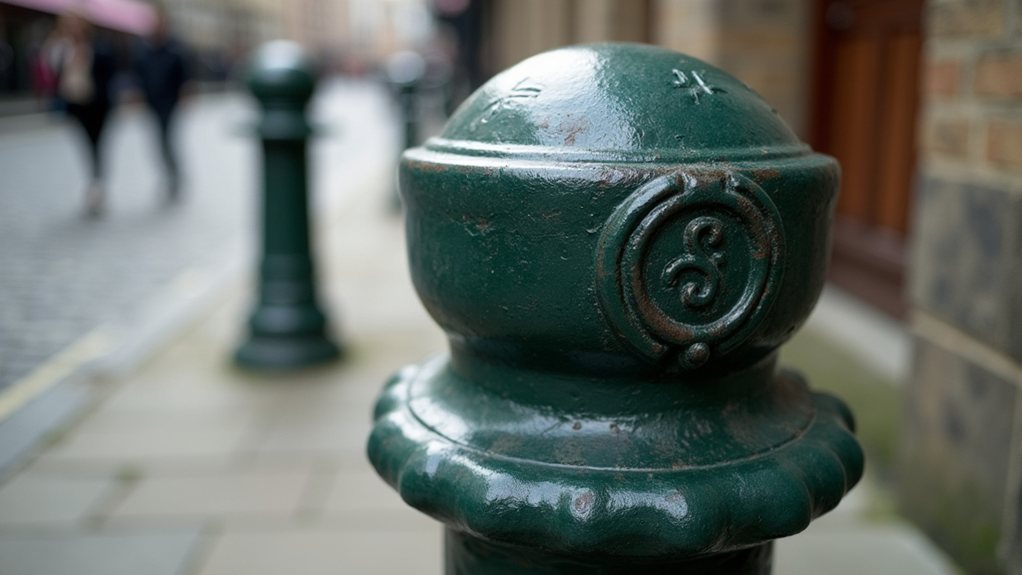
Remnants of Britain’s military past are scattered throughout the country, often hiding in plain sight. The common street bollard, now a fixture in urban landscapes, originated in the 18th century as wooden posts before evolving into cast iron barriers. These sturdy obstacles served a practical purpose, keeping horse-drawn carts from mounting pavements and protecting buildings from damage.
Today, they continue their silent duty, largely unrecognized as historic artifacts.
Britain’s iconic red post boxes and phone booths tell similar tales of bygone eras. The country hosts over 115,000 post boxes in 800 different styles, each bearing the royal insignia of the monarch during whose reign it was manufactured.
From Victorian postmarks to Elizabethan insignias, Britain’s scarlet sentinels chronicle the passage of royal reigns across the kingdom.
Meanwhile, the famous K6 red telephone box, introduced in 1935, numbered 64,000 by 1960. Though only 11,700 survive today, about 2,000 have earned listed status for preservation, with many finding new life as mini-libraries or defibrillator stations.
Less recognized are the public benches installed specifically for wounded soldiers during World War I. The Sussex Daily News reported on May 4, 1916, that these seats were considered a “war boon,” placed strategically along routes like the road from Ditchling to Keymer. During this same period, elaborate Victorian and Edwardian public bench designs became particularly prevalent throughout urban parks and promenades.
Local councils supported this initiative to provide rest spots for recovering Red Cross hospital patients during rehabilitation walks.
Campaign furniture reveals another fascinating chapter of military history. These portable pieces accompanied British officers during colonial wars, designed to be transported on mules or pack animals. As seen in photographs from 1898, men of the Royal Lancaster Regiment crafted these furnishings with both military precision and fine craftsmanship. The furniture’s popularity waned dramatically after World War I when trench warfare transformed military operations and living conditions. Even the Duke of Wellington traveled with quarters carried by six mules, while his troops required 74 more. These collapsible furnishings included split chests of drawers, folding Roorkhee chairs, writing desks with brass corners, field beds, and dining tables with removable legs.
Other military remnants include drinking troughs from horse-transport days, early gas lamps, tram poles, and the hundreds of listed milestones and guideposts.
Many historic iron railings disappeared during World War II, melted down for the war effort, making surviving examples all the more significant as tangible links to Britain’s military heritage.