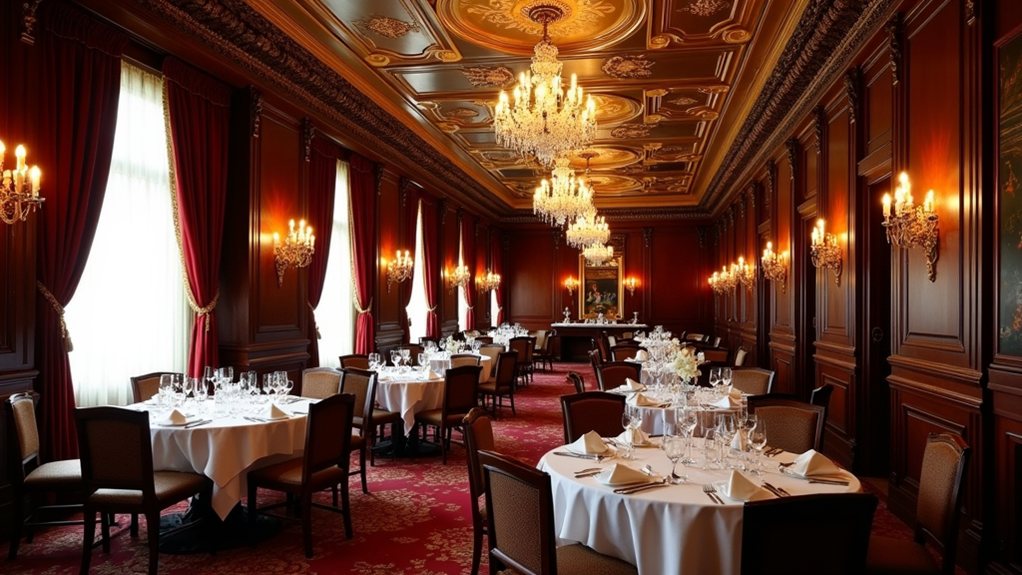

Elegance and grandeur defined the first-class dining saloon aboard the RMS Titanic, a remarkable space designed by architect Charles Fitzroy Doll based on his earlier work at London’s Hotel Russell. Located on D Deck and spanning the full width of the ship, this dining room measured an impressive 114 feet long by 92 feet wide, creating an unbroken space of approximately 1,000 square meters. This made it the largest room on any ship of its time, a demonstration of the White Star Line’s commitment to luxury.
The dining room featured Jacobean-inspired design elements, including paneled walls painted in glossy white enamel, which differed from traditional wooden paneling. Decorative neoclassical pilasters adorned with Ceres goddess heads graced the walls, while Neptune figures occupied the corners. Lion medallions held swag drapery on fluted blocks, and Renaissance motifs with twin swans added artistic flair throughout the space. The interiors were actually created by Aldam, Heaton & Co., a firm experienced with designing White Star Line vessels.
The room could accommodate over 500 passengers at once, with seating arranged around oak furniture upholstered in green Moroccan leather. Unlike modern cruise ships, these chairs were not bolted to the floor. The floor itself was covered with patterned linoleum tiles in red, blue, and gold, while elaborate carved oak buffet stations stood at both ends of the room. This magnificent dining area served as a social hub for the wealthy Edwardian elite, showcasing the distinct class divisions of the era.
What many passengers didn’t realize was that they were dining in a near-identical copy of the Hotel Russell restaurant in London’s Bloomsbury district, now known as the Kimpton Fitzroy. Doll, known for his decadent architectural style (which inspired the phrase “dolling it up”), created the Titanic’s interior with the same lavish approach he used for the hotel.
To enhance the dining experience, lighting behind 5-foot leaded-glass windows created the illusion of a land-based restaurant. The strategic placement on the upper decks ensured first-class passengers enjoyed their meals with minimal engine vibrations that would have disturbed those on lower decks. Diners enjoyed eleven-course French-style meals with wine pairings, served on thousands of pieces of fine china.
The final dinner served on April 14, 1912, included oysters, filet mignon, and roast duckling before the ship’s tragic encounter with an iceberg that same night.